

In today’s fast-paced, interconnected economy, change is constant. Shifting consumer expectations, evolving technology, and intensifying competition are fundamentally reshaping how business is done, a transformation clearly reflected in research on digital transformation. The most successful companies don’t just react faster to change — they adapt more thoughtfully.
To maintain a competitive edge, it’s crucial for businesses to combine a clear understanding of their goals with flexibility in achieving them.
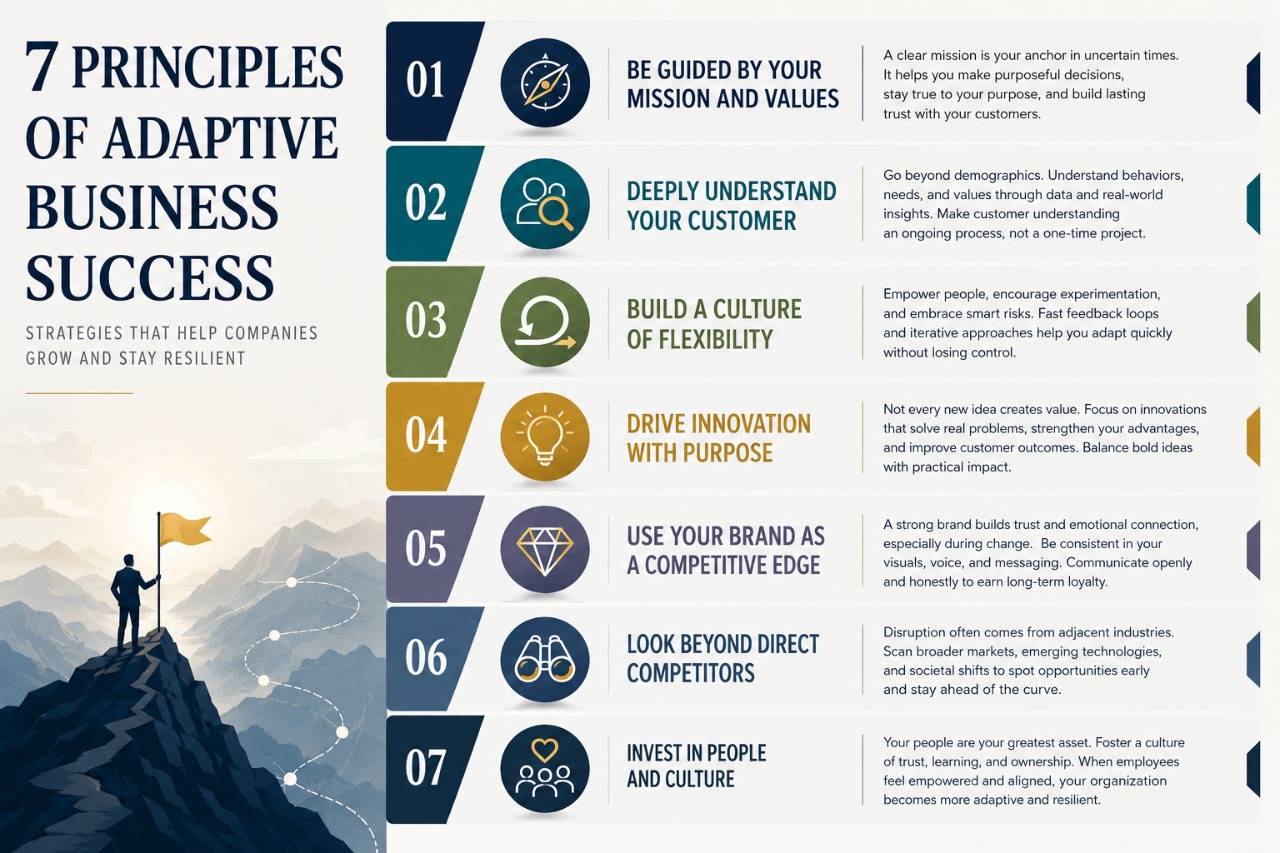
1. Lean on your company’s mission and values
During unstable times, a clearly defined mission becomes an anchor. This isn’t just a formal statement; it’s an understanding of why the business exists and the value it brings to people. In a changing market, a company with a clear mission can evolve its products and communications without losing customer trust. The mission helps guide decision-making, prioritizing initiatives that create long-term value rather than chasing short-term trends.
2. Deeply understand your customer
It’s vital for businesses to regularly study their customers — not just their demographics, but also their behaviors, needs, and values, a point reinforced by established principles of user experience research.
This involves using both quantitative data and qualitative research, including real-world observations. The most successful companies treat customer research as an ongoing process, not a one-time task. This allows them to identify emerging needs in a timely manner and offer relevant solutions.
3. Cultivate a culture of flexibility
Flexibility isn’t just about processes; it’s about corporate culture. Adaptive companies give employees more autonomy in decision-making, encourage experimentation, and tolerate calculated risks. Short feedback loops, rapid idea testing, and phased implementation of solutions help them respond to change more quickly and without major disruptions. It’s important for leadership to support this culture: without trust and clear direction, speed can lead to chaos.

4. Innovate with intention
Innovations are important, but not all of them deliver real value. Market leaders introduce new ideas purposefully, focusing on meaningful differentiation rather than novelty for novelty’s sake. This might involve rethinking the business model, improving the customer experience, or developing new products that align with the company’s strengths. It’s essential to strike a balance between ambition and practical value to ensure that innovations truly strengthen the business’s position.
5. Use your brand as a competitive advantage
In saturated markets where products are often similar, the brand becomes the key differentiator. A strong brand builds trust, reduces perceived risk, and creates an emotional connection with the customer — especially during times of change. A consistent visual style, a unified tone of communication, and a clear brand “voice” help customers navigate changes more easily. Open and honest communication boosts audience loyalty.
6. Look beyond direct competitors
Significant changes often come from adjacent industries. Companies focused only on direct competitors risk missing larger trends. Analyzing related markets, new technologies, and social shifts allows for a broader perspective on business development. This approach helps you prepare for change in advance and secure a leading position.
7. Invest in people and corporate culture
At the heart of any adaptation are people. Companies that value diverse opinions, strategic thinking, and a creative approach are better equipped to handle uncertainty. A culture that encourages initiative, learning, and accountability helps employees act confidently in the face of change. When a company’s internal values align with its external promises, the ability to adapt becomes a natural part of the business.