

A successful business is built on smart investments, talent, strategy, hard work, and sometimes, a bit of luck. In many ways, this aligns with the classic understanding of business as a system aimed at creating value and generating profit.
What makes a business successful?
This question isn’t as simple as it seems. While profit is the obvious answer, for many business owners, success isn’t just measured by numbers. Money is often a result of success, not the cause of it. A successful business is built on smart investments, talent, strategy, hard work, and sometimes, a little bit of luck.
In this article, we’ll break down what success in business means, what factors contribute to it, and how to achieve it.
What is business success?
Although everyone has their own definition of success, truly successful companies usually share common traits.
Many tech companies, for example, measure success by the quality of the customer experience, understanding that a high level of service ultimately leads to increased profits. In the investment world, success is often seen as the ability to generate returns for clients, which, in turn, benefits the company itself.
Understanding that employees are their most valuable asset, many modern companies also measure success by the level of engagement and satisfaction within their team. When employees are happy with their work, it helps build a reputation as an attractive employer, attract top talent, and create a foundation for future growth.

The definition of success shouldn’t be based solely on profit. It’s important to also consider the factors that lead to it. Take a step back, define what really matters for your business, and use those as your benchmarks for success.
10 factors that contribute to business success
Defining success is one thing, but achieving it is another. A business owner needs to understand the factors that influence the long-term growth and stability of their company.
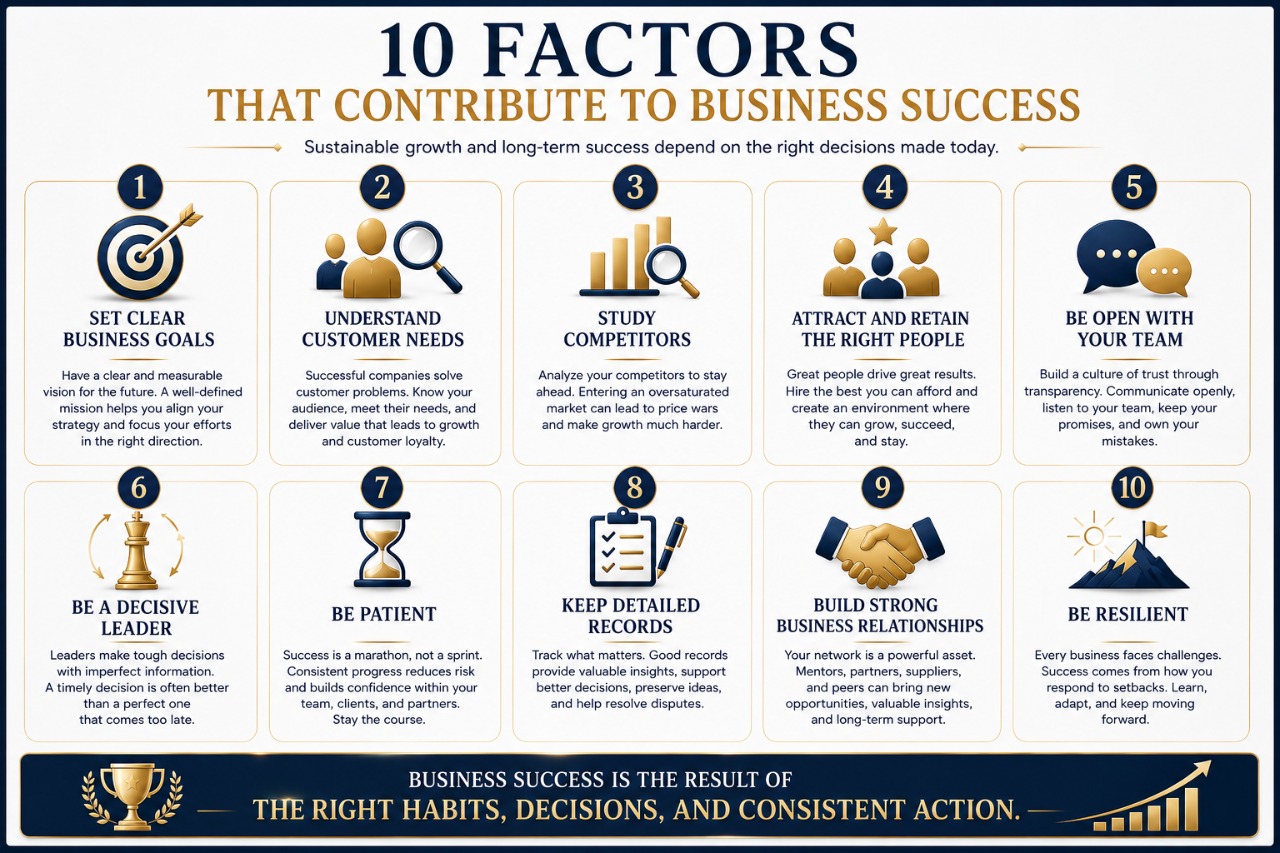
Here are 10 key factors:
- Set clear business goals. Every company needs a clear and measurable vision for its future. This could be striving for market leadership, expanding internationally, growing the team, or building a sustainable business. When the mission is clear, it’s much easier to align work accordingly.
- Understand customer needs. Successful companies solve customer problems. They find their niche, study their audience’s needs, and offer a suitable solution. A customer-centric approach often leads to increased sales and better service, and paying close attention to people can become your real advantage.
- Study your competitors. No matter how innovative your business is, you will always have competitors. It’s important to study them to stay ahead. Entering an oversaturated market often leads to fierce price competition, which makes growth difficult.
- Attract and retain the right people. Employees are one of a business’s most important assets. Attracting and retaining top talent is critical for success. Hire the best people you can afford and create a great environment for them. This will strengthen your company’s reputation as an employer and help attract talented people in the future.

Business income - Be open with your team. The most successful modern companies build a culture of trust based on transparency. Clearly articulate your values, discuss important decisions with your team, keep your promises, and admit your mistakes.
- Be a decisive leader. Leaders have to make tough decisions, often without complete information. An imperfect but timely decision is often better than a perfect but delayed one. Rely on your experience and common sense, and be confident in your choices.
- Be patient. Success in business is a gradual process that requires consistent effort. Steady and confident growth reduces risks and builds trust within the team. Don’t let a single big deal or a single bad week knock you off your path.
- Keep detailed records. Document everything important. Data is a powerful resource that helps you better understand your company’s internal processes. Well-organized records help preserve ideas, build trust, and resolve disputes.
- Build strong business connections. Your professional network is a valuable asset for your business. Relationships with mentors, partners, suppliers, and colleagues can be a source of new orders, useful connections, and valuable advice. Be active in your industry, for example, by using professional networking tools.
- Be resilient. Every business face challenges. Success is not defined by the absence of mistakes, but by how you react to them. Resilience is one of the most important qualities of an entrepreneur. View failures as opportunities to learn, grow, and move forward.