

Turning your hobby into a business is an exciting but challenging journey. If you’re considering turning your handmade hobby into a business, it’s worth learning the basic steps to launch your own craft-based venture.
10 steps to start a handmade business: ideas for success
You don’t have to be an entrepreneurship expert to sell your creations successfully. Proper preparation and a clear plan, including insurance, will help you avoid financial and legal problems.
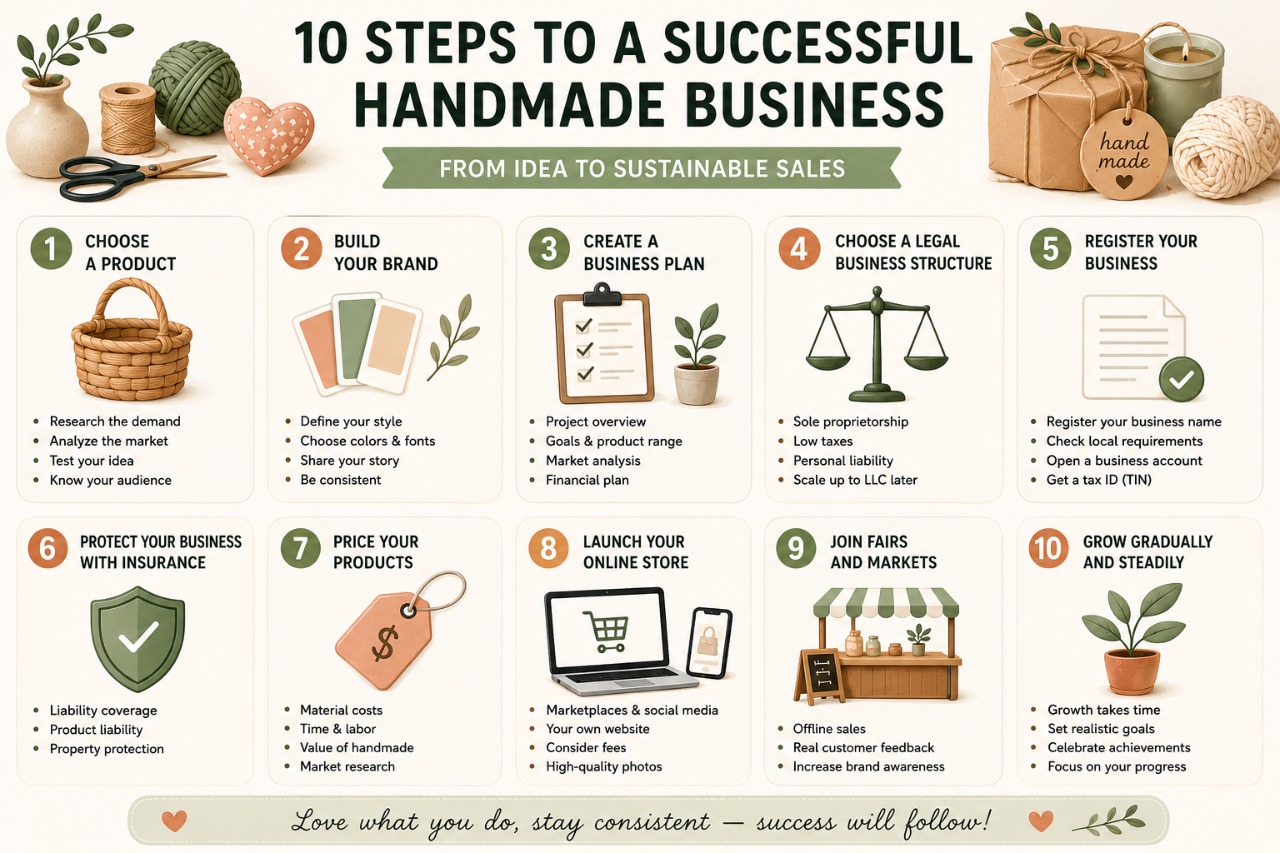
Step 1: choose your product
Before deciding on your product line, answer two questions: Do you enjoy creating this product, and will there be demand for it? Don’t rush to build up a large inventory — first, research the market:
- Ask friends and family for honest feedback.
- Browse marketplaces — see what’s selling on Etsy or Amazon Handmade.
- Use social media — run polls and test interest.
- Visit craft fairs — observe what other artisans are selling.
This will help you better understand your target audience and make your products more unique.
Step 2: develop your brand identity
A brand’s perception is shaped by its color palette, story, and communication style. Use the results from your research in step one to choose visual and thematic elements:
- Luxury style: neutral tones, elegant fonts.
- Playful style: soft, bright colors, decorative elements.
- Minimalism: simple fonts and natural shades.
Your brand should be recognizable in everything: packaging, website, and storefront design.
Step 3: create a business plan
While many different business ideas exist, handmade ventures stand out for their simple start. However, even a small business needs a well-thought-out business plan. It should include a brief project description, goals, product range, business structure, market analysis, and financial projections.

Step 4: choose a legal structure
Most people start by registering as a sole proprietorship — it’s simple and accessible. The plus side is a relatively low tax burden. The downside is personal liability for business debts. As you grow, you might consider forming a limited liability company (LLC).
Step 5: register your business officially
Registration and necessary permits will help you operate legally and reduce risks:
- Register your business name if it’s different from your own.
- Check local government requirements for permits.
- Open a business bank account.
- Obtain an Employer Identification Number (EIN) if you don’t have one — you’ll need it when hiring employees.
Step 6: protect your business with insurance
Even a minor incident, like an allergic reaction to a product, can lead to expenses. Insurance can help protect you from risks. A policy usually includes general liability, product liability, and property protection.
Step 7: set prices for your products
Pricing requires careful consideration. Factor in the cost of materials, your time, and the value of handmade work. Look at the market, but don’t undervalue your labor.
Step 8: launch an online store
You can start with marketplaces and social media, then move on to your own website. Pay attention to platform fees. Use high-quality photos — good lighting and a neutral background are all you need.
Step 9: participate in fairs and markets
In-person sales provide live feedback and help increase brand awareness.
Step 10: grow gradually
Growth takes time. Don’t compare yourself to others — focus on your own progress. Set realistic goals and celebrate your achievements to stay motivated and avoid burnout.